Scuba Diving Cenote Chac Mool
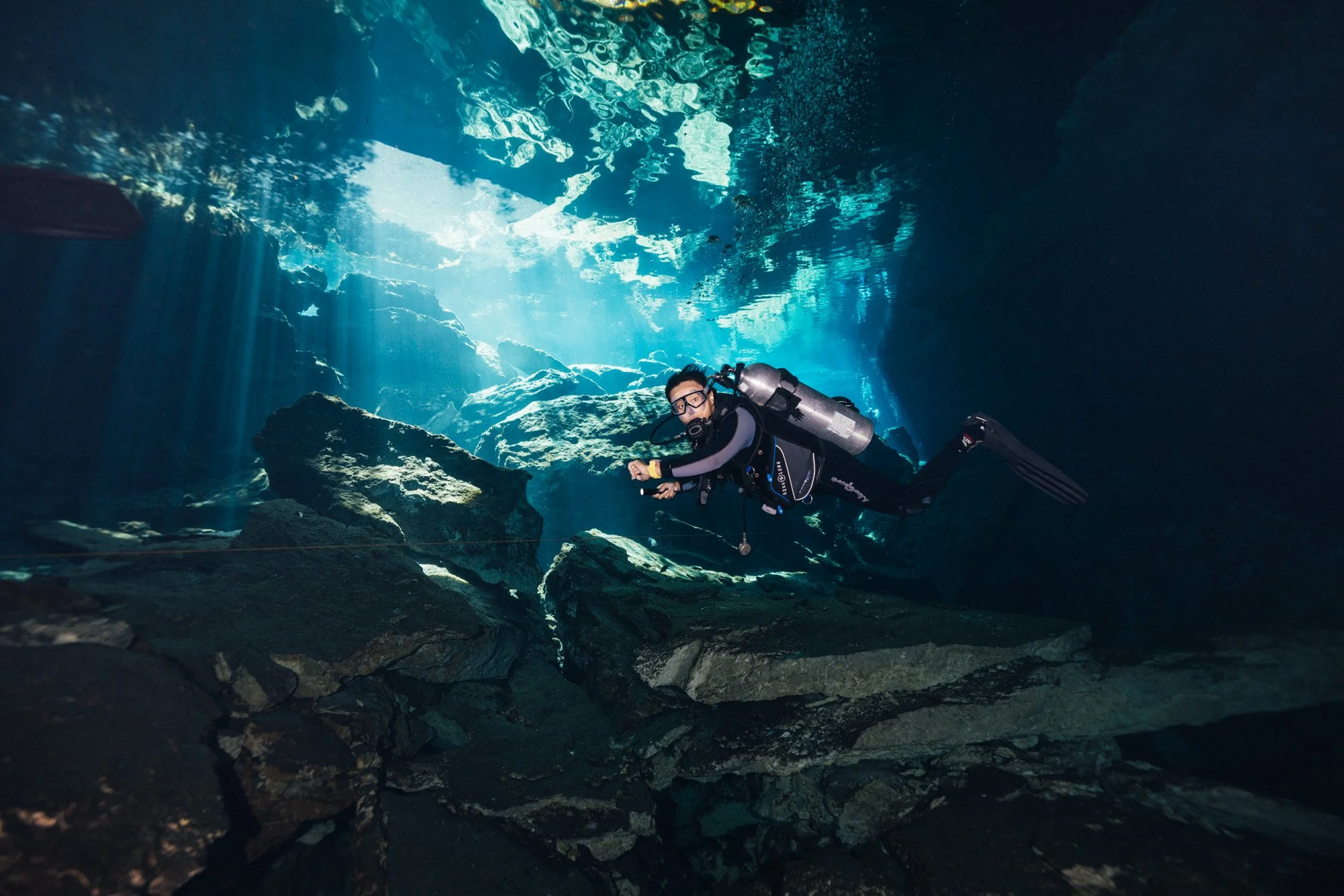
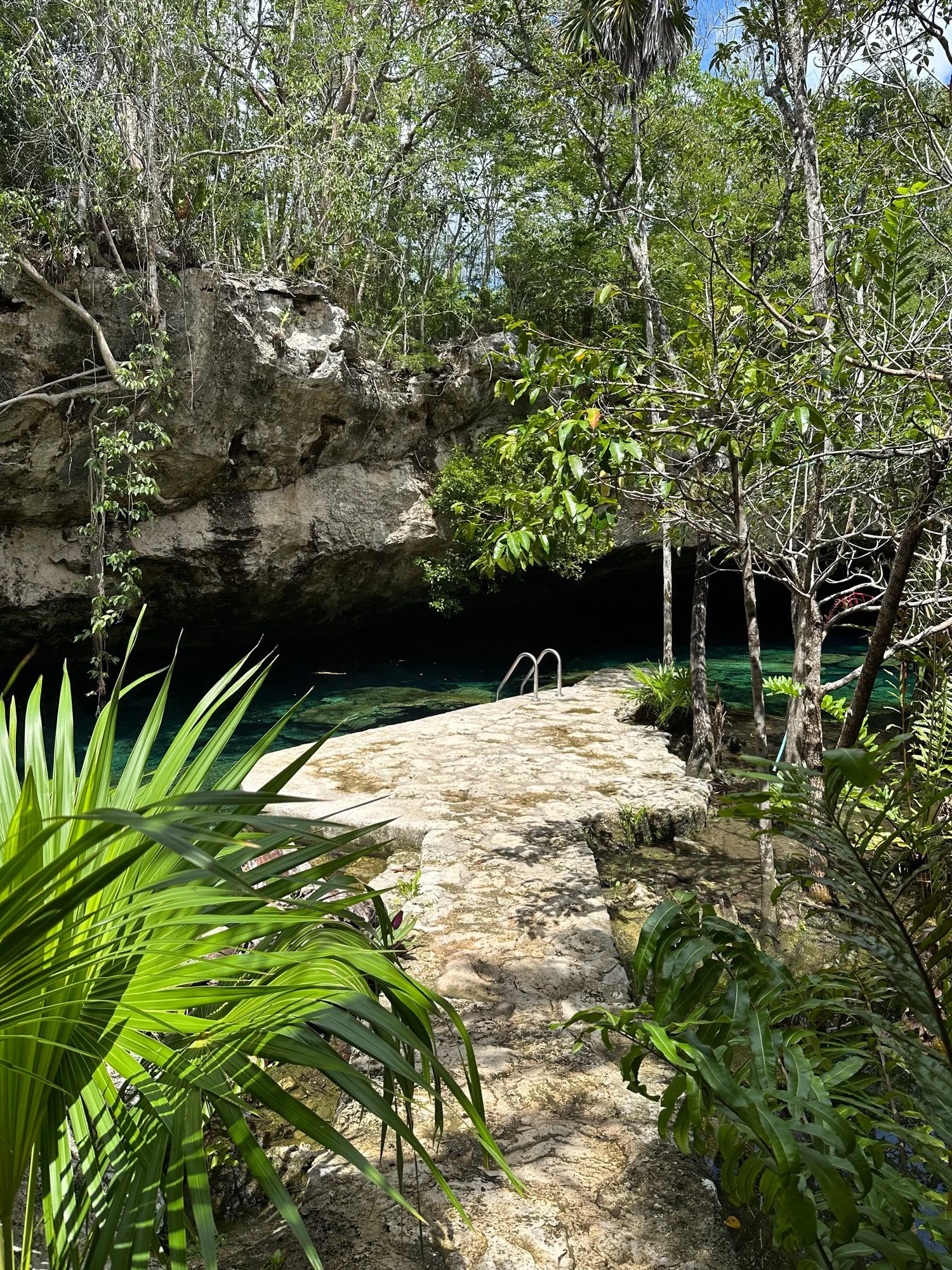
Entrance to Cenote Chac Mool
September 2025 was my first time traveling to the Yucatan Peninsula in Mexico, which I had wanted to visit for years to swim and dive in cenotes. Cenotes are inland limestone sinkholes filled with freshwater, and there are thousands scattered throughout the region. The ancient Mayans considered them portals to the underworld, which, after experiencing them, feels like a pretty accurate description.
I went to the Playa del Carmen area to train deep freediving in a cenote, which, a bit disappointingly, had dark and murky water. It was great for depth training, but not exactly the clear, glowing cenote experience I had imagined. On my rest day between freediving sessions, I took a colectivo down to meet Taz of Taz Diving to scuba dive in two of the more visually striking cenotes, Chac Mool and Kukul Kan.
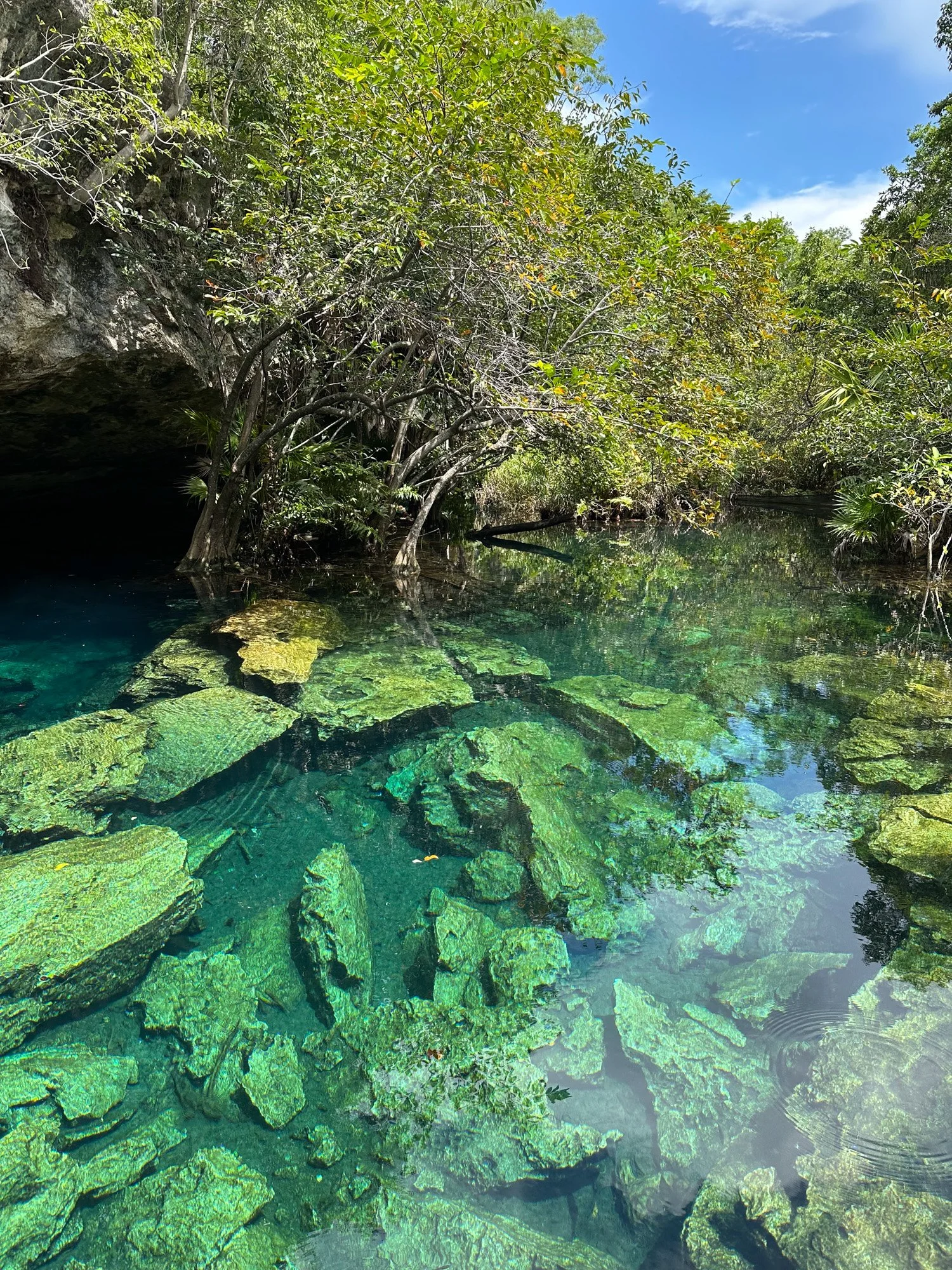
Beautiful, clear water
This was my first cave—or more accurately—cavern dive. Not going to lie, I was a little spooked by the idea of diving in an underground cavern system. Googling Chac Mool beforehand didn’t help. There are plenty of accounts of divers getting lost or dying in this exact cenote. Taz reassured me that the dive is very safe as long as you follow the guidelines, which in this case are literal underwater lines that you do not stray from.
Chac Mool is unique because it has both freshwater and saltwater layers, which creates a halocline. When you pass through it, the water becomes distorted and blurry, almost like a layer of fog from a fog machine. Visibility shifts dramatically depending on your depth, and the light filtering in from above changes everything. Sunbeams cut through the openings in the ceiling, illuminating sections of the cavern while others remain completely dark. It feels like diving through a trippy, ethereal and alien environment.
At one point we surfaced inside the cavern where there is a pocket of air. You take your regulator out and can actually breathe, floating in this still, dimly lit space surrounded by rock. Roots from the jungle above reach down through cracks in the ceiling.
Because of the number of incidents over the years, including divers damaging the fragile formations or getting disoriented, personal cameras are not allowed on these dives. I ended up purchasing photos from a local underwater photographer, Photo by Triton Productions (@triton.prod), who knows exactly where to position himself to capture dramatic photos of the light, shadows, and silhouettes.
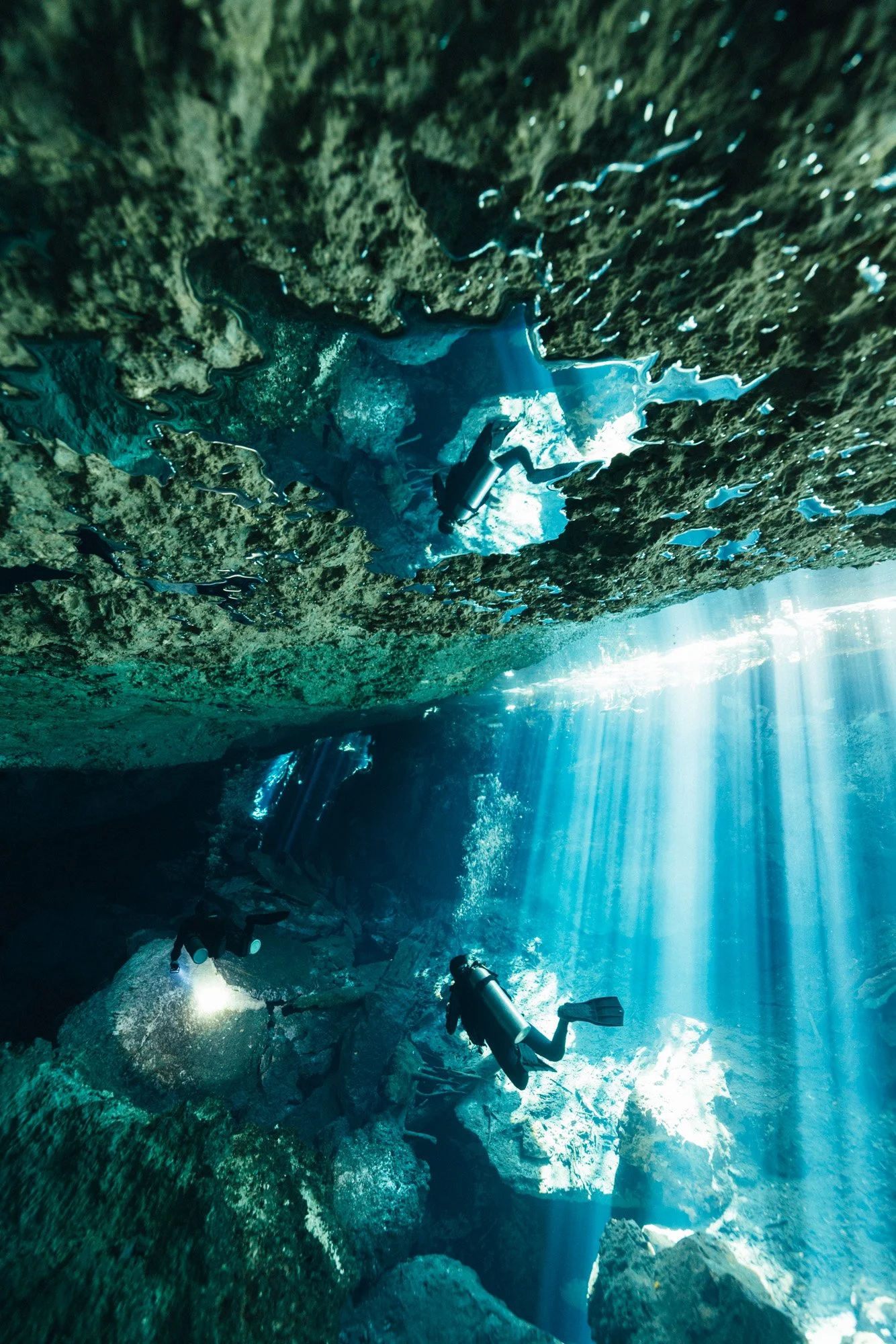
My reflection in bubbles trapped up against the limestone ceiling
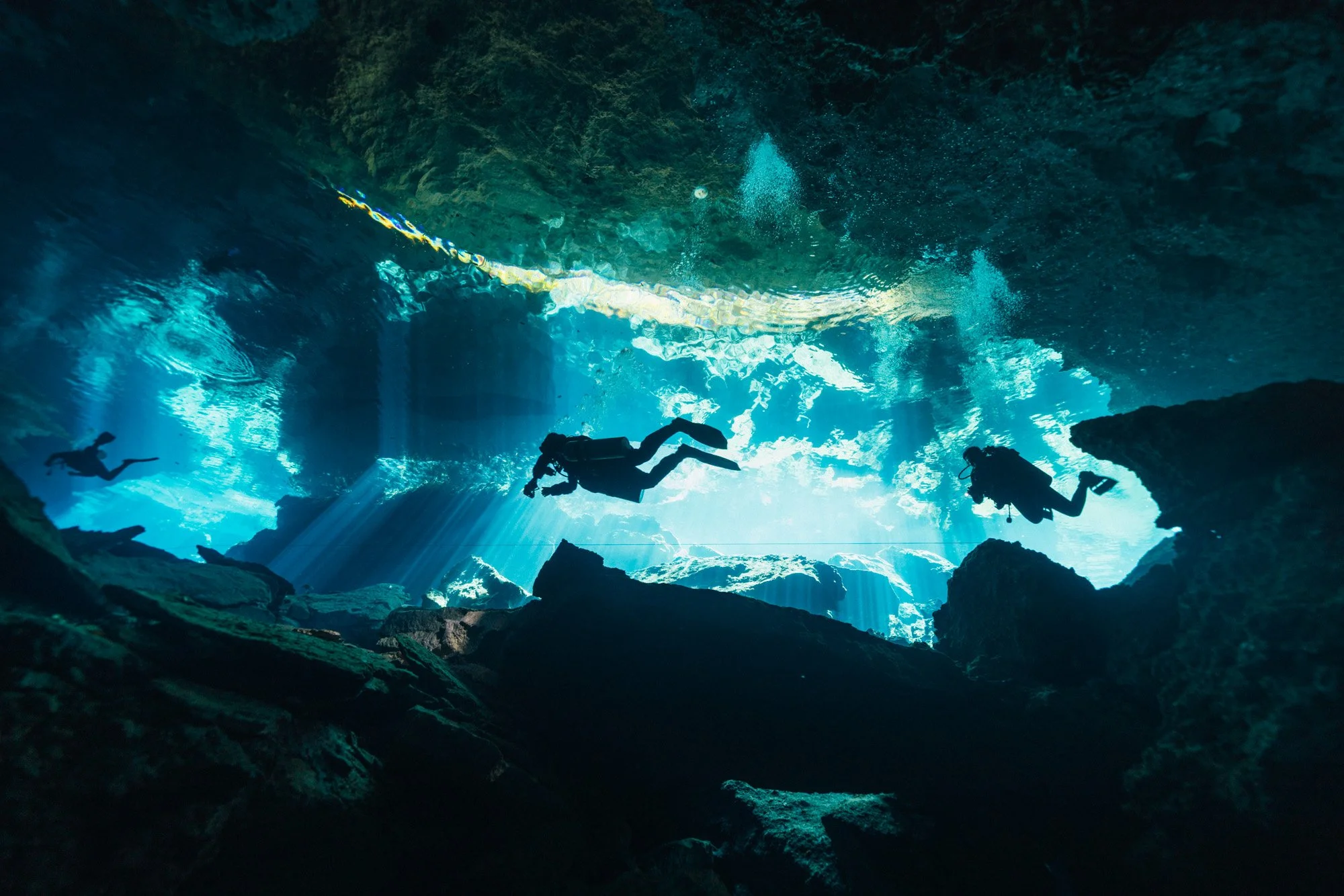
Me following Taz on the start of our dive (looking up and ahead to the open area of the cenote where we entered)
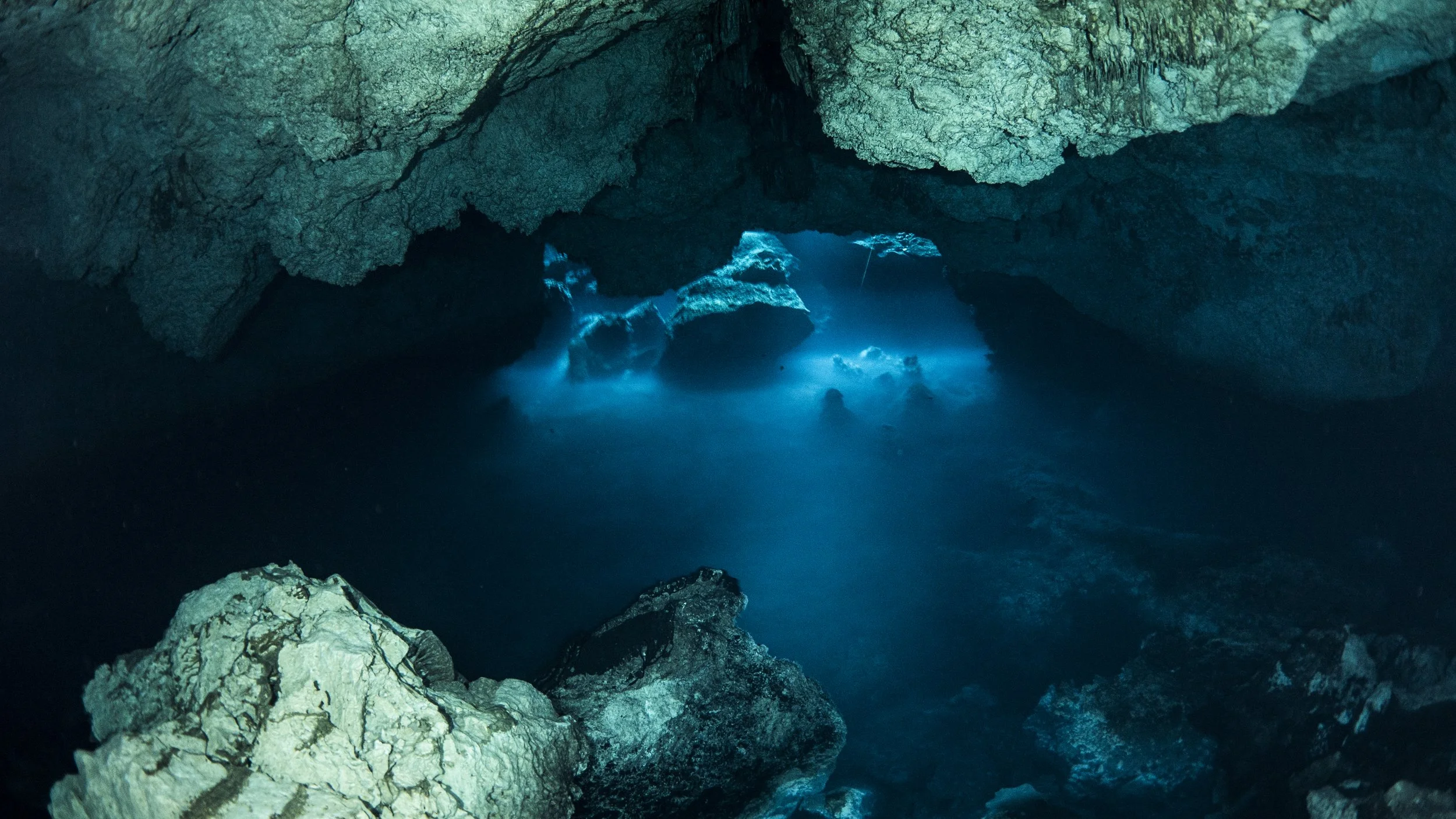
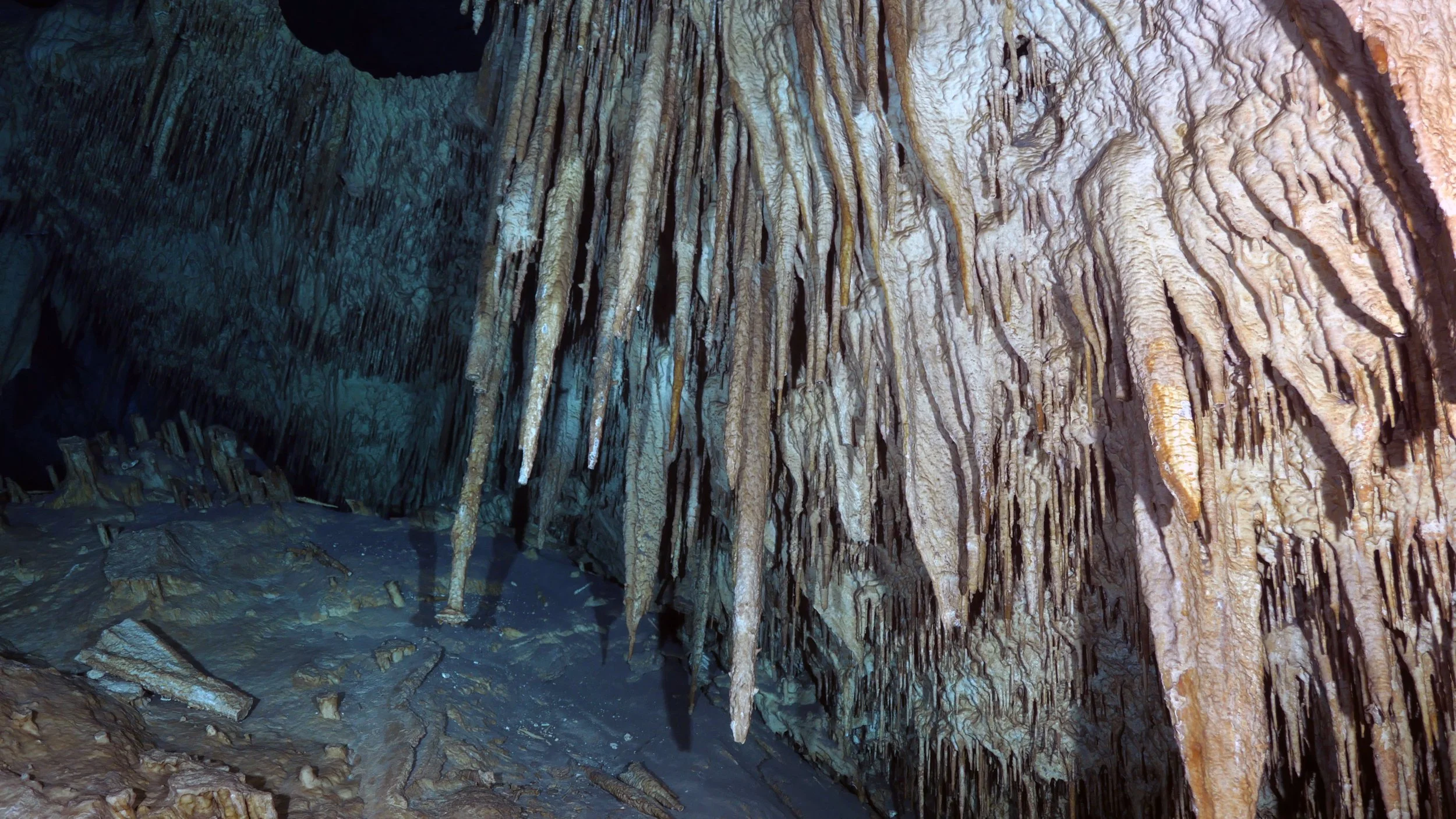
Diving under the halocline of freshwater and saltwater layers
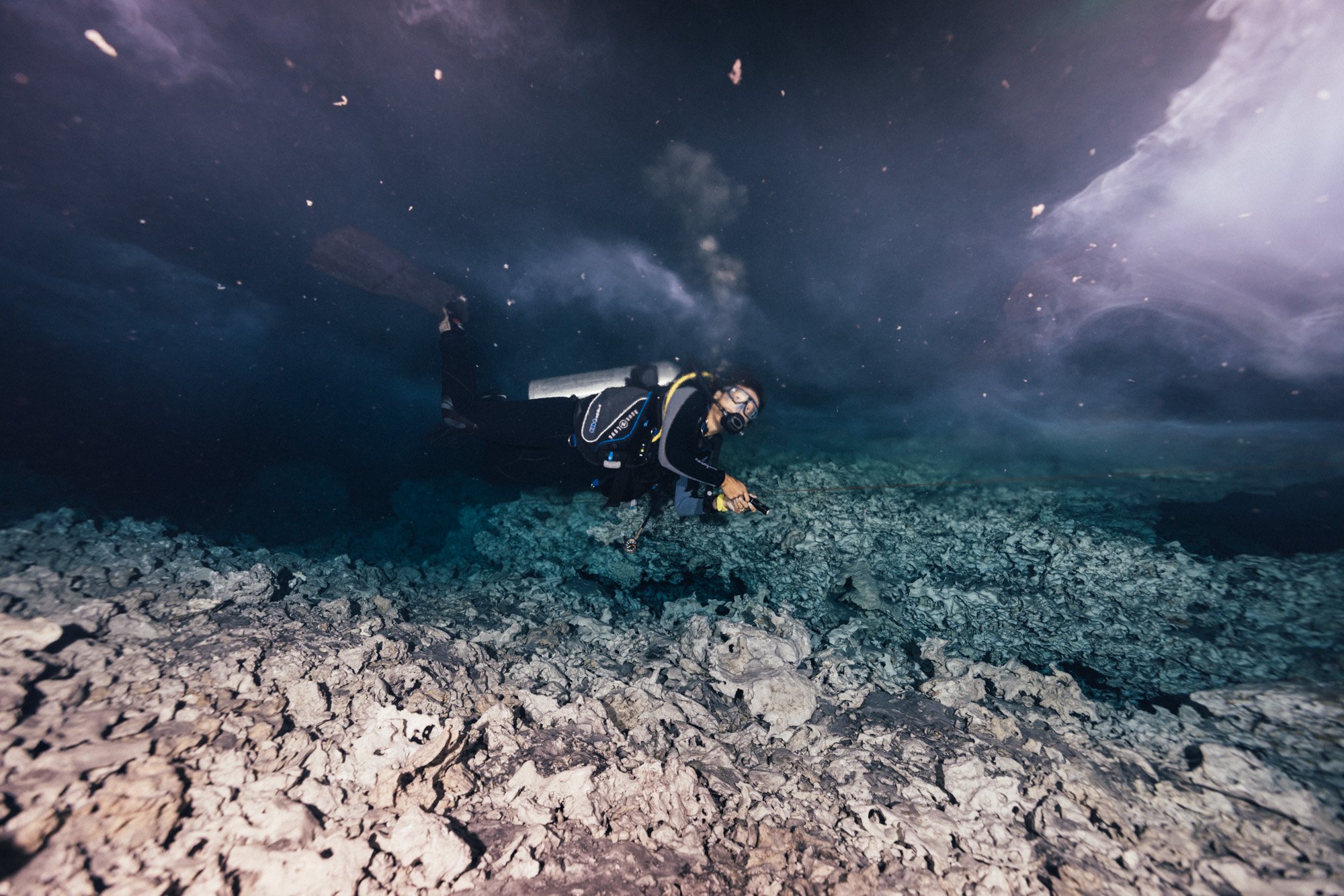
Me diving under the halocline of freshwater and saltwater layers
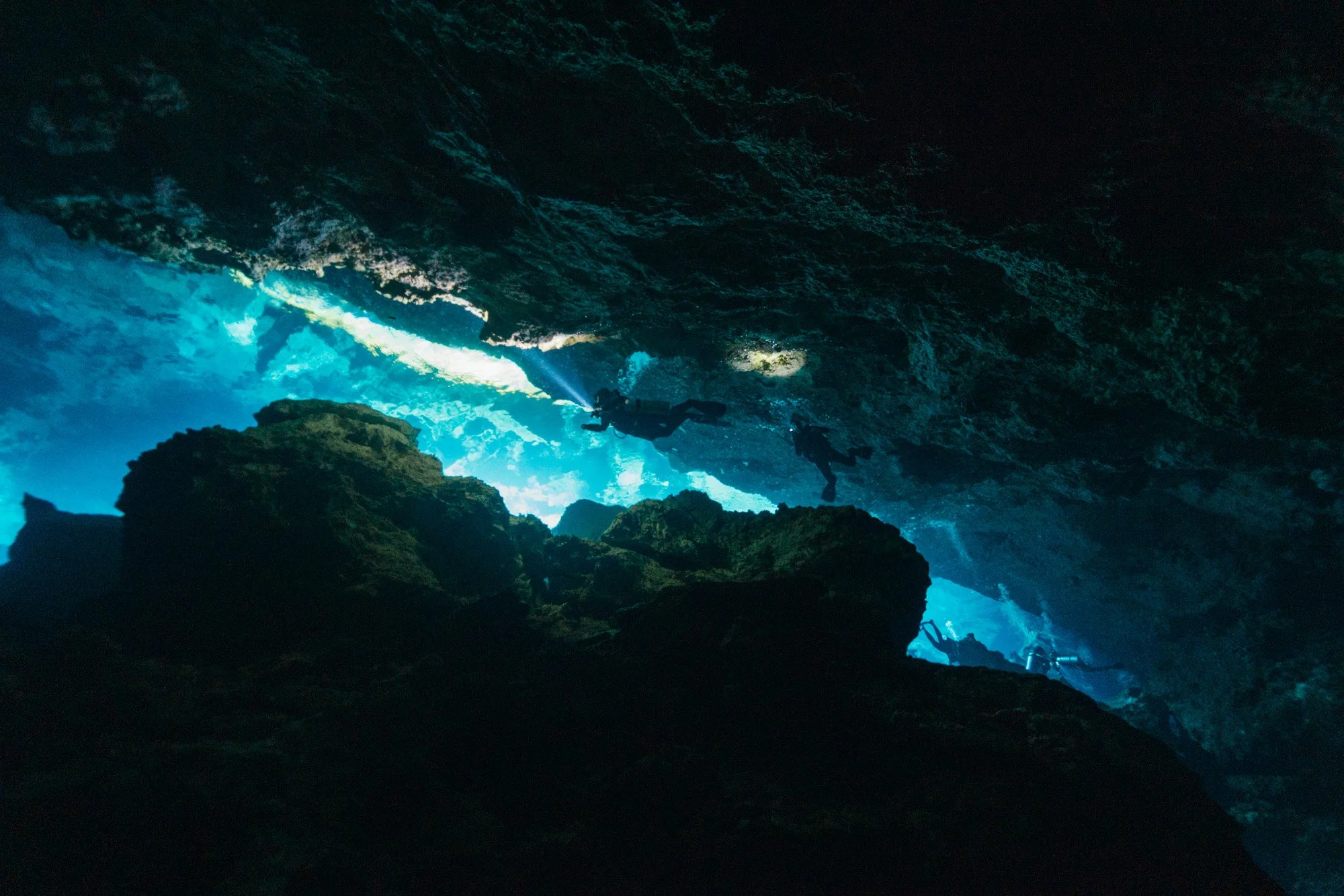
I loved this dive. I expected it to feel scary, but it really wasn’t. It ended up being one of my favorite dives ever. I loved moving through the space in all directions, with the shifting light and layers of water changing how everything looked. We were never very deep, and almost always within sight of some distant glow from the surface.
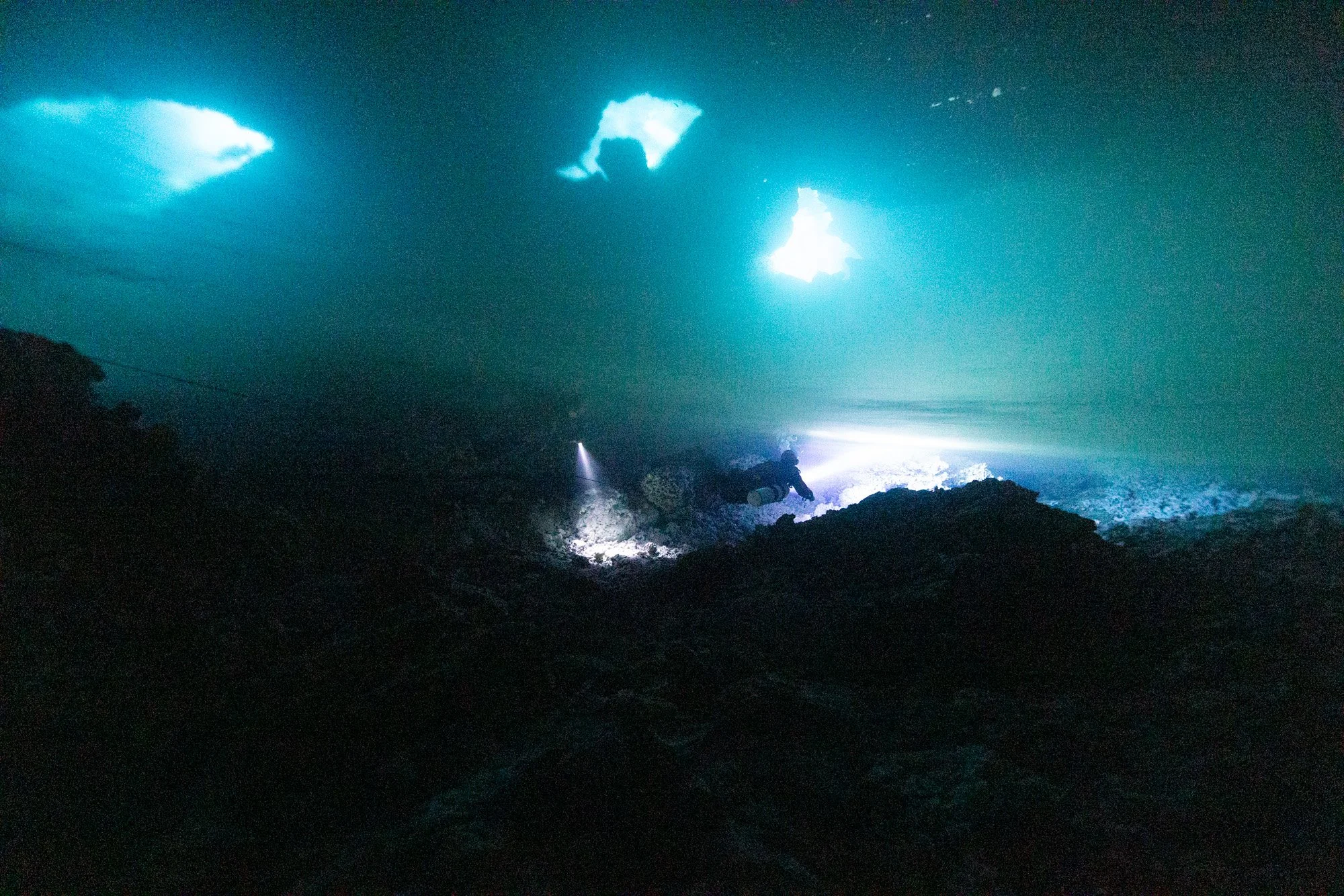
There were a few moments where everything went dark, and it was just our flashlights catching the guideline in front of us. But those moments didn’t last long. Before long, we were moving back toward light again. It felt more like navigating than exploring something unknown.
The second cenote, Kukul Kan, felt completely different, but just as surreal. The entrance was only a short walk from the first dive, but the experience shifted immediately. We started in a small, dark cave and had to swim under the limestone right away, straight into darkness. It feels a little unsettling at first, but as soon as you turn around, there is a huge amount of light pouring in from the entrance behind you.
The water here looked totally different too. Because of recent rain, everything had a green tint, almost an unnatural slime green. There were dead, submerged trees scattered throughout, and even an old rowboat resting underwater. It gave the whole place a slightly eerie feeling, like a flooded, overgrown world that had been sitting there for a long time.
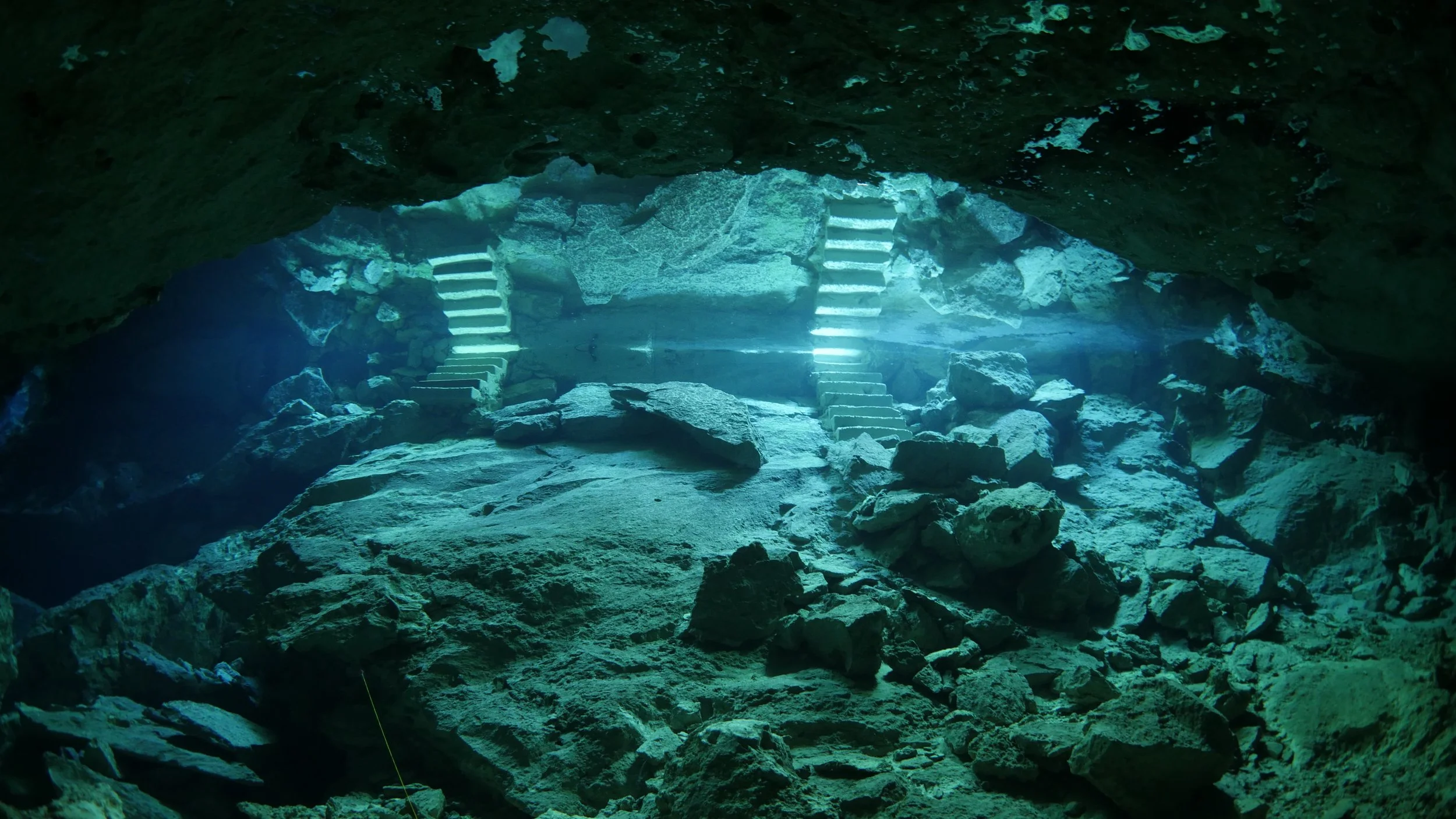
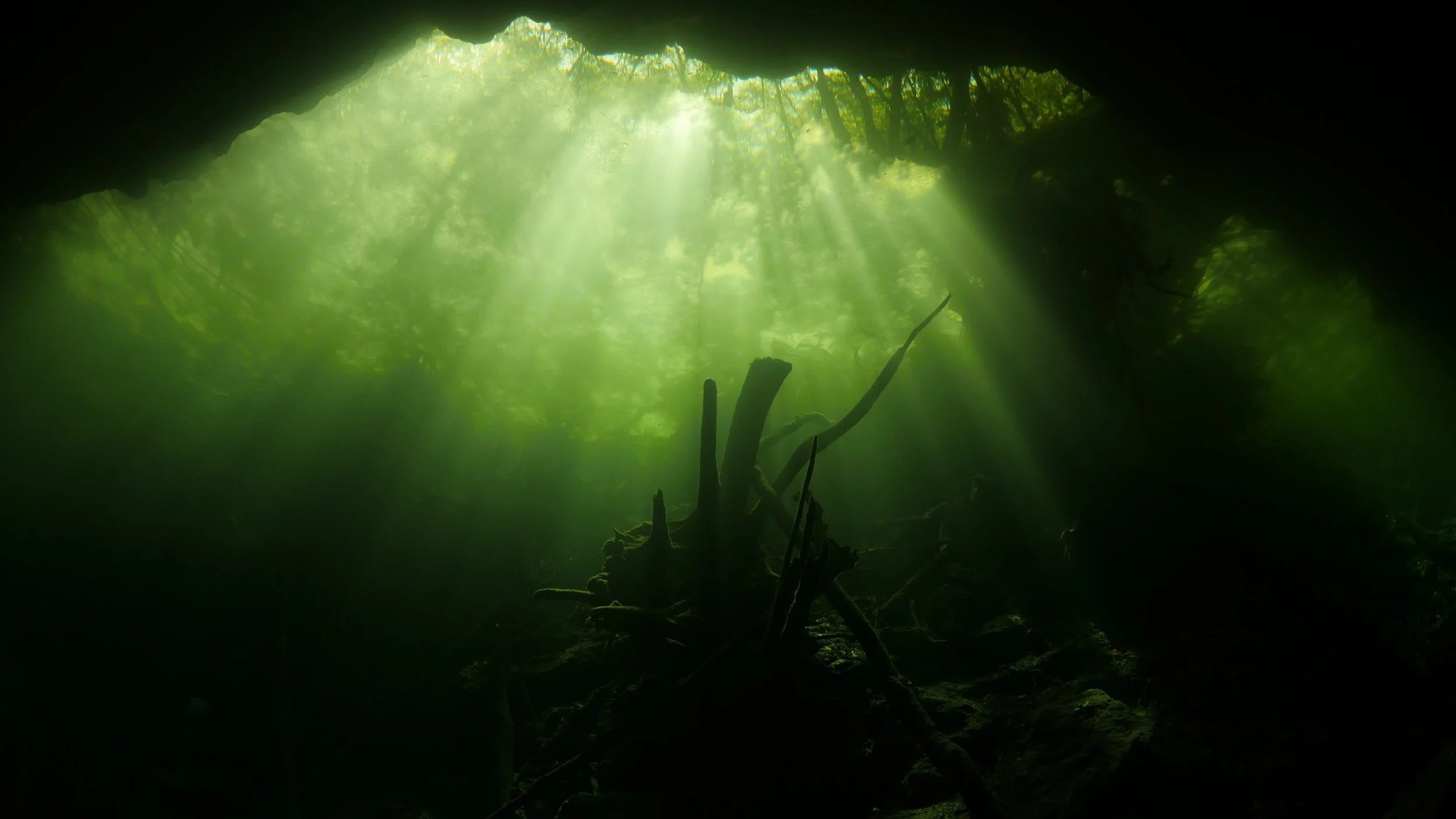
All underwater photos by Triton Productions (@triton.prod)